
Indoor plants have become an essential element of modern interior design, not only for their aesthetic appeal but also for their numerous physical and psychological benefits. Greenery has a natural ability to brighten indoor spaces, create a calming environment, and even improve air quality. Whether you live in a compact apartment, work in a small office, or want to enhance your home’s ambiance, indoor plants offer a versatile and rewarding solution.
This comprehensive guide explores everything you need to know about indoor plants—from what they are and how to care for them to choosing the best varieties for your space.
Table of Contents
What Are Indoor Plants?
Indoor plants, also known as houseplants, are plants that are cultivated and grown inside homes, offices, or other enclosed environments. Most indoor plants are tropical or subtropical species that naturally thrive in warm, humid climates, making them well-suited to indoor conditions.
Common examples include palms, ferns, succulents, and flowering plants. These plants are adapted to survive with indirect light, controlled watering, and stable temperatures—conditions typically found indoors.
Why Indoor Plants Are Important
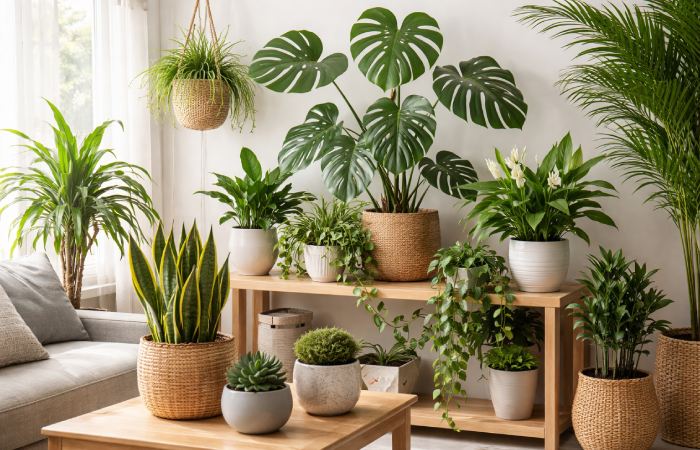
Indoor plants are more than just decorative elements. They contribute to overall well-being and environmental quality in several ways:
- Improve indoor air quality
- Enhance mood and reduce stress
- Increase productivity and focus
- Add natural beauty to interiors
- Reduce noise levels in enclosed spaces
According to research supported by organizations like NASA, certain indoor plants can help remove toxins such as formaldehyde and benzene from the air.
How to Plant Indoor Plants
In most cases, indoor plants are already purchased in containers, so planting is not always necessary. However, there are two main situations where planting or replanting is required:
- Repotting – When a plant outgrows its current container
- Growing from bulbs or seeds – When starting a plant from scratch
Basic Planting Steps
| Step | Description |
|---|---|
| Choose a pot | Ensure it has drainage holes |
| Add soil | Use high-quality potting mix |
| Place plant | Position roots properly |
| Fill gaps | Add soil around roots |
| Water lightly | Avoid overwatering initially |
Light Requirements for Indoor Plants
Light is one of the most important factors in plant growth. Different plants have varying light needs.
Light Requirements by Plant Type
| Plant Type | Light Requirement | Example Plants |
|---|---|---|
| High light | Direct sunlight | Succulents, Cacti |
| Medium light | Bright indirect light | Philodendron, Dracaena |
| Low light | Minimal light | Pothos, Peace Lily |
Most foliage plants require around 6–8 hours of indirect light daily. Always research the specific needs of your plant species.
Qualities of a Good Houseplant
Choosing the right plant is crucial for success. Here are key qualities to look for:
Healthy Plant Checklist
| Feature | What to Look For |
|---|---|
| Roots | Thick, light-colored, not mushy |
| Leaves | Dense, vibrant, no discoloration |
| Stem | Strong and upright |
| Pest-free | No white spots or sticky residue |
| Smell | Fresh, not rotten |
Best Low-Light Indoor Plants
If your space lacks natural sunlight, consider these low-light plants:
Top Low-Light Plants
| Plant Name | Key Feature | Care Level |
|---|---|---|
| Philodendron | Adaptable, hardy | Easy |
| Pothos (Devil’s Ivy) | Fast-growing vine | Very easy |
| Dracaena | Tall, elegant leaves | Easy |
| Peace Lily | Produces white flowers | Moderate |
Easiest Indoor Plants to Care For
For beginners, low-maintenance plants are the best choice.
Easy-Care Houseplants
| Plant | Why It’s Easy |
|---|---|
| Sansevieria (Snake Plant) | Tolerates neglect |
| ZZ Plant | Survives low light and drought |
| Succulents | Require minimal watering |
| Philodendron | Highly adaptable |
| Pothos | Grows in almost any condition |
Common Types of Houseplants
Indoor plants come in many varieties, each suited to different environments.
Popular Houseplants
| Category | Examples |
|---|---|
| Foliage plants | Philodendron, Aglaonema |
| Flowering plants | Peace Lily, Orchids |
| Climbing plants | Pothos, Ivy |
| Palms | Areca Palm, Bamboo Palm |
| Ferns | Boston Fern |
Best Indoor Plants Overall
The best indoor plants are those that are resilient, adaptable, and visually appealing.
Top Indoor Plants
| Plant | Benefits |
|---|---|
| Aglaonema | Tolerates low light |
| Aspidistra | Extremely hardy |
| Dracaena | Stylish and versatile |
| Succulents | Compact and decorative |
| Philodendron | Easy to maintain |
How to Maintain Indoor Plants
Proper care ensures long-lasting and healthy plants.
Maintenance Tips
| Task | Recommendation |
|---|---|
| Watering | Keep soil moist, not soggy |
| Drainage | Ensure pots have holes |
| Lighting | Place near windows or artificial light |
| Cleaning | Wipe leaves regularly |
| Monitoring | Check for pests and diseases |
How to Trim Indoor Plants
Pruning helps maintain shape and encourages growth. Only trim when necessary, such as when:
- Leaves become yellow or dead
- Plant grows unevenly
- Overgrowth occurs
Common Causes of Indoor Plant Death
Understanding mistakes can help you avoid them.
Common Issues
| Cause | Effect |
|---|---|
| Overwatering | Root rot |
| Underwatering | Wilting |
| Poor lighting | Slow growth |
| Neglect | Overall decline |
Lifespan of Indoor Plants
Most indoor plants live between 2 to 5 years, depending on care and species. With proper maintenance, some plants can live much longer.
Indoor Plants That Improve Air Quality
Some plants are known for their air-purifying properties.
Air-Purifying Plants
| Plant | Benefit |
|---|---|
| Dracaena | Removes toxins |
| Weeping Fig | Improves oxygen levels |
| Bamboo Palm | Filters pollutants |
Impact of Indoor Plants on Mood
Indoor plants positively influence mental health by:
- Reducing stress and anxiety
- Increasing happiness
- Enhancing focus and creativity
Studies show that greenery in workspaces can significantly boost productivity and satisfaction.
Cost of Indoor Plants
Indoor plants are generally affordable.
Pricing Guide
| Plant Size | Price Range |
|---|---|
| Small | Low cost |
| Medium | Moderate |
| Large | Higher but valuable |
Buying from reputable garden centers ensures better quality.
Best Plants for Small Spaces
If you have limited space, consider compact plants.
Small-Space Plants
| Plant | Feature |
|---|---|
| Succulents | Compact and stylish |
| Ivy (Hedera helix) | Climbing plant |
| Pothos | Hanging or trailing |
| Mini ferns | Decorative |
Fertilizing Indoor Plants
Indoor plants require less fertilizer than outdoor plants.
Fertilizer Guide
| Type | Usage |
|---|---|
| Liquid fertilizer | Monthly feeding |
| Slow-release | Long-term nutrition |
| Flowering fertilizer | For blooming plants |
Always follow label instructions to avoid over-fertilization.
How to Get Rid of Insects
Pests can damage indoor plants if not treated.
Pest Control Steps
| Step | Action |
|---|---|
| Identify pests | Check leaves and stems |
| Use insecticidal soap | Spray thoroughly |
| Repeat treatment | Every 2 weeks |
| Clean leaves | Use damp cloth |
When to Water Indoor Plants
Watering correctly is essential.
Signs Your Plant Needs Water
| Indicator | Meaning |
|---|---|
| Dry soil | Needs water |
| Light pot | Soil is dry |
| Wilting leaves | Underwatered |
| Brown crispy edges | Too dry |
| Mushy leaves | Overwatered |
Conclusion
Indoor plants are a powerful addition to any living or working space. They combine beauty, functionality, and health benefits in a way few other design elements can. From improving air quality to enhancing mood and productivity, houseplants offer a natural solution to modern indoor living challenges.
By choosing the right plants, understanding their needs, and maintaining them properly, anyone can enjoy the long-term benefits of indoor greenery. Whether you’re a beginner or an experienced plant enthusiast, incorporating indoor plants into your space is a decision that brings lasting value and satisfaction.
