
Lifestyle is the dominant, modifiable force shaping long-term health, and a small set of high-leverage habits drives most outcomes through compounding biological effects. Understanding these priorities is more powerful than following generic wellness advice.
Most people searching “impact of lifestyle on health” want a clear answer: Do daily habits really matter more than genetics or medical care? For most chronic diseases, yes. Heart disease, type 2 diabetes, obesity, many cancers, and depression are strongly influenced by behavior patterns accumulated over years. Medical care often intervenes after damage appears; lifestyle determines whether that damage develops in the first place.
The challenge is that lifestyle risk builds invisibly. You rarely feel arteries stiffening, insulin resistance rising, or sleep debt impairing cognitive function. Because the harm is gradual, people underestimate it. Meanwhile, small unhealthy routines compound just like financial debt — slowly at first, then suddenly.
The encouraging truth is that positive habits compound the same way. A modest improvement in sleep, movement, diet quality, and stress management can shift dozens of biological processes simultaneously. This article explains how lifestyle shapes physical and mental health, which factors matter most, and how to prioritize changes for maximum long-term benefit.
We regularly update tips on our website Search Trim. Please keep supporting us. Thank you.
Table of Contents
What “Lifestyle” Actually Means in Health Science
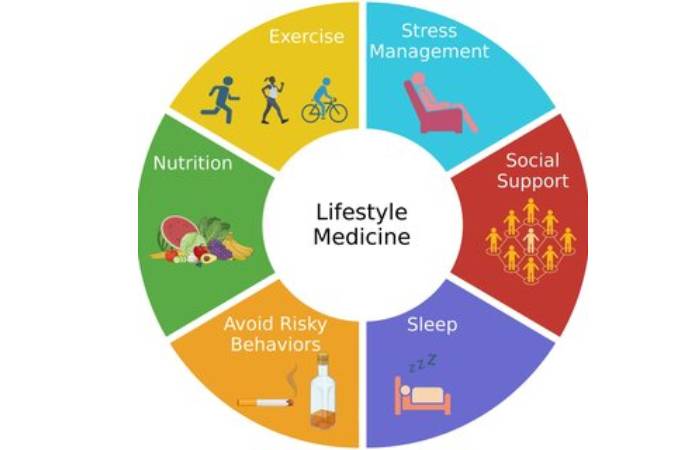
In everyday conversation, lifestyle often means diet and exercise. In health science, it refers to the entire pattern of daily exposures affecting the body.
Public-health frameworks used by organizations such as the World Health Organization treat lifestyle as a system with interacting components.
| Lifestyle Dimension | Core Elements | Primary Systems Affected | Typical Long-Term Impact |
| Nutrition | Food quality, timing, portion | Metabolic, digestive | Obesity, diabetes risk |
| Movement | Exercise, daily activity | Cardiovascular, musculoskeletal | Heart disease prevention |
| Sleep | Duration, consistency | Hormonal, neurological | Cognitive & metabolic health |
| Stress | Psychological load | Endocrine, immune | Hypertension, burnout |
| Substances | Tobacco, alcohol | Multi-system | Cancer, liver disease |
| Environment | Social & physical context | Behavioral | Lifestyle sustainability |
A key concept is healthspan — the years lived in good physical and mental condition. Two people may live to the same age but experience vastly different quality of life depending on lifestyle.
The Keystone Habit Framework: Why Some Changes Matter More
Not all healthy behaviors deliver equal benefits. Some function as central regulators that influence many downstream processes.
Researchers in behavioral science describe these as “keystone habits” — routines that trigger positive ripple effects.
| Keystone Habit | Immediate Benefit | Secondary Effects | Long-Term Payoff |
| Regular sleep schedule | Restored energy | Appetite control, mood stability | Lower chronic disease risk |
| Daily movement | Improved circulation | Better sleep, insulin sensitivity | Longevity increase |
| Whole-food nutrition | Nutrient sufficiency | Reduced inflammation | Metabolic resilience |
| Stress regulation | Emotional stability | Improved immunity, focus | Cardiovascular protection |
Illustrative example:
A chronically sleep-deprived professional begins sleeping 7–8 hours nightly. Within weeks, cravings decrease, productivity improves, and exercise feels less exhausting. No diet plan was required — sleep improvement indirectly changed eating and activity patterns.
This interconnectedness is why prioritization is more effective than attempting to fix everything at once.
Nutrition: The Metabolic Foundation of Health

Food acts as both fuel and biochemical information. It influences blood sugar regulation, inflammation, hormone signaling, and gut microbiota composition.
Institutions such as the Harvard T.H. Chan School of Public Health emphasize dietary patterns over individual “superfoods.” The strongest evidence consistently supports diets rich in minimally processed plant foods, lean proteins, and healthy fats.
| Dietary Pattern | Key Characteristics | Short-Term Effects | Long-Term Health Impact |
| Whole-food dominant | Fruits, vegetables, whole grains | Stable energy | Lower disease risk |
| High sugar intake | Refined carbs, sweet drinks | Energy spikes & crashes | Diabetes risk |
| Ultra-processed diet | Packaged convenience foods | Overeating tendency | Obesity, inflammation |
| Low fiber intake | Minimal plant foods | Digestive issues | Poor gut health |
Importantly, sustainability matters more than perfection. A moderately healthy diet maintained for decades beats a strict regimen abandoned after months.
Physical Activity: Movement as Preventive Medicine
Human physiology evolved for regular movement. Prolonged sitting is a relatively recent phenomenon and carries measurable health risks.
The Centers for Disease Control and Prevention identifies physical inactivity as a major contributor to chronic disease. Benefits of movement extend far beyond weight control.
| Type of Activity | Examples | Primary Benefits | Additional Effects |
| Aerobic exercise | Walking, cycling | Heart & lung health | Mood improvement |
| Strength training | Weights, resistance bands | Muscle & bone strength | Metabolic health |
| Flexibility work | Stretching, yoga | Mobility | Injury prevention |
| Daily movement | Stairs, chores | Energy expenditure | Reduced sedentary risk |
Scenario comparison
| Lifestyle Pattern | Likely Outcome Over Time |
| Mostly sedentary | Elevated disease risk |
| Occasional workouts | Moderate protection |
| Consistent daily activity | Strong protection |
Movement improves insulin sensitivity, circulation, brain function, and even sleep quality, making it another keystone habit.
Sleep: The Master Regulator
Sleep is a biological maintenance cycle, not simply rest. During sleep, the body performs repair processes that cannot occur while awake.
Functions of sleep include:
- Tissue repair and growth
- Memory consolidation
- Hormone regulation
- Immune system recalibration
- Brain waste clearance
| Sleep Pattern | Short-Term Effects | Long-Term Consequences |
| Adequate & regular | Alertness, focus | Optimal health |
| Irregular timing | Fatigue | Hormonal disruption |
| Chronic short sleep | Poor concentration | Obesity, diabetes risk |
| Poor quality sleep | Irritability | Mental health decline |
Sleep deprivation increases appetite hormones while reducing satiety signals, which partly explains its link to weight gain.
Stress and Mental Health: The Bidirectional Loop
Stress is a natural survival response. Problems arise when it becomes chronic.
Persistent stress keeps the body in a heightened state of alert, increasing cortisol and sympathetic nervous system activity.
| Stress Pattern | Immediate Effect | Long-Term Health Impact |
| Short-term stress | Increased focus | Minimal harm |
| Chronic stress | Fatigue, tension | Hypertension, burnout |
| Poor coping methods | Temporary relief | Worsening mental health |
| Healthy coping | Emotional regulation | Resilience |
Mental health and lifestyle reinforce each other continuously. Poor sleep can worsen anxiety; anxiety can disrupt sleep. Exercise can reduce depression; depression can reduce motivation to exercise.
Breaking negative cycles often requires small environmental or routine changes rather than relying on motivation alone.
Substance Use and Risk Behaviors
Certain behaviors produce disproportionate harm compared to others.
| Substance or Behavior | Short-Term Effects | Long-Term Risks |
| Tobacco use | Temporary stimulation | Cancer, heart disease |
| Excess alcohol | Relaxation | Liver disease, hypertension |
| Chronic caffeine overuse | Alertness | Sleep disruption |
| Drug misuse | Euphoria or relief | Dependency, organ damage |
Public-health consensus is clear: eliminating tobacco is one of the most effective ways to improve life expectancy.
Lifestyle, Immunity, and Inflammation
Many chronic illnesses share a common biological driver: persistent low-grade inflammation.
Lifestyle factors influencing inflammation:
| Increases Inflammation | Reduces Inflammation |
| Poor diet | Whole foods rich in nutrients |
| Physical inactivity | Regular movement |
| Chronic stress | Relaxation practices |
| Sleep deprivation | Adequate sleep |
| Smoking | Smoking cessation |
The gut microbiome — trillions of microorganisms living in the digestive tract — plays a major role in immune regulation. Diet, sleep, and stress all influence its composition.
Genetics vs Lifestyle: Who Really Determines Outcomes?
Genes influence susceptibility, but lifestyle determines whether risks manifest.
Large long-term studies show that even individuals with strong genetic predispositions can significantly reduce disease risk through healthy behaviors.
| Genetic Risk Level | Lifestyle Quality | Likely Outcome |
| High | Poor | Disease highly likely |
| High | Healthy | Risk substantially reduced |
| Low | Poor | Disease still possible |
| Low | Healthy | Optimal health potential |
This interaction explains why prevention strategies emphasize behavior modification rather than genetic screening alone.
Environmental and Social Influences
Lifestyle choices occur within real-world constraints.
| Environmental Factor | How It Shapes Behavior |
| Work schedule | Limits sleep and activity |
| Food availability | Influences diet quality |
| Urban design | Determines walkability |
| Social norms | Affect habits and expectations |
| Digital environment | Encourages sedentary behavior |
For example, shift workers experience circadian disruption that increases metabolic risk regardless of personal motivation.
Why Healthy Habits Are Hard to Maintain
Human psychology favors immediate rewards over long-term benefits.
| Barrier | How It Affects Behavior | Possible Solution |
| All-or-nothing thinking | Abandoning plans after setbacks | Aim for consistency |
| Decision fatigue | Poor choices when tired | Pre-planned routines |
| Time pressure | Skipped exercise or sleep | Short, regular habits |
| Unsupportive environment | Limited options | Modify surroundings |
Behavioral research suggests that small, stable routines outperform dramatic lifestyle overhauls.
Practical Action Plan: Highest-Return Changes
If resources or motivation are limited, prioritize actions with the greatest health impact.
| Priority | Action | Why It Matters |
| 1 | Avoid tobacco | Largest risk reduction |
| 2 | Improve sleep consistency | System-wide benefits |
| 3 | Move daily | Cardiovascular protection |
| 4 | Increase whole foods | Metabolic stability |
| 5 | Manage stress | Mental & immune health |
These habits reinforce one another, creating a positive feedback loop.
Long-Term Benefits: Healthspan and Quality of Life
Healthy lifestyles improve not only survival but daily functioning.
| Area of Life | Improvement From Healthy Lifestyle |
| Physical ability | Greater strength and mobility |
| Mental clarity | Better focus and memory |
| Emotional resilience | Reduced anxiety and depression |
| Independence in aging | Lower disability risk |
| Productivity | Higher sustained performance |
Two individuals of the same age can have dramatically different capabilities depending on lifestyle history.
Conclusion
The impact of lifestyle on health is profound precisely because it is cumulative. Each meal, night of sleep, stress response, and movement pattern sends signals that shape biological systems.
You do not need perfect habits — you need consistent ones.
Over years and decades, ordinary daily choices become one of the strongest determinants of physical vitality, mental well-being, independence, and longevity. Healthcare can treat disease, but lifestyle largely determines whether disease develops in the first place.
