
Acne should be treated using a severity-based medical framework, not random product trials. A structured escalation model delivers predictable, long-term results.
Most acne content online lists ingredients. Few explain how to decide what to use, when to escalate, how long to continue, or what it costs. That gap is why people bounce between products and lose confidence.
Here is the direct answer to your search:
The right treatment for acne problem depends on severity, skin tolerance, and hormonal pattern. Mild acne responds to OTC retinoids and pore-clearing agents. Moderate acne needs combination therapy. Severe or scarring acne often requires prescription medication supervised by a dermatologist.
This guide is structured for beginners first, but detailed enough for skincare-aware readers. It blends clinical logic (aligned with the American Academy of Dermatology and NICE guidance) with practical decision-making.
We regularly update tips on our website Search Trim. Please keep supporting us. Thank you.
Table of Contents
Understanding Acne: The Four Biological Drivers
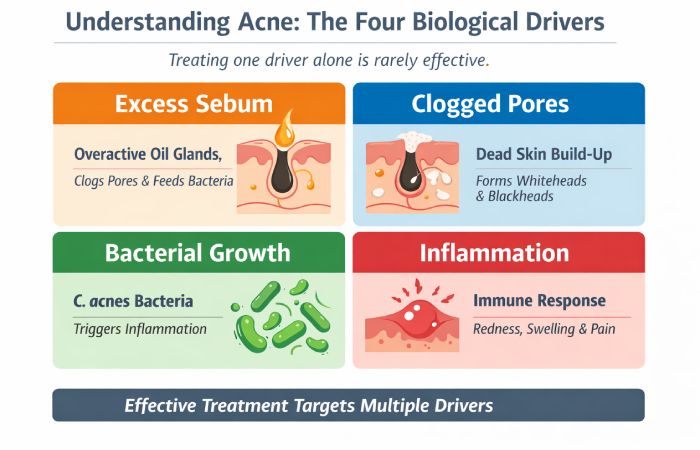
Acne vulgaris develops through overlapping biological processes. Treating one driver while ignoring others often fails.
| Biological Driver | What Happens | What Targets It | Why It Matters |
|---|---|---|---|
| Excess Sebum | Overactive oil glands | Retinoids, isotretinoin | Oil feeds clogging & bacteria |
| Follicular Blockage | Dead cells clog pores | Retinoids, salicylic acid | Forms whiteheads/blackheads |
| Bacterial Growth (C. acnes) | Bacteria multiply | Benzoyl peroxide, antibiotics | Triggers inflammation |
| Inflammation | Immune response activates | BPO, antibiotics, isotretinoin | Causes redness & pain |
Core Insight: Effective acne treatment must hit at least two drivers simultaneously.
The Severity-Based Acne Treatment Ladder
Level 1: Mild Comedonal Acne
Recommended OTC Product Options
| Product | Type | Country Availability | Approx Price (USD Equivalent) | Review Snapshot |
|---|---|---|---|---|
| Differin Gel | Retinoid | US, UK, India, AU | $12–$18 | Highly rated for long-term control |
| CeraVe SA Cleanser | BHA Cleanser | Global | $10–$20 | Gentle exfoliation, low irritation |
| La Roche-Posay Effaclar A.I. | Spot Treatment | US, EU, India | $20–$30 | Effective for isolated lesions |
Typical Routine
| Time | Step |
|---|---|
| Morning | Gentle cleanser + salicylic acid |
| Night | Adapalene + moisturizer |
| Daily | Sunscreen SPF 30+ |
Expected Timeline:
-
Weeks 1–3: Possible purging
-
Weeks 4–8: Reduced clogged pores
-
Week 12: Stable improvement
Level 2: Moderate Inflammatory Acne
Red bumps and pustules require bacterial control + oil regulation.
Combination Therapy Options
| Treatment Combo | Pros | Cons | Approx Monthly Cost |
|---|---|---|---|
| BPO + Adapalene | Broad coverage | Dryness risk | $20–$40 |
| BPO + Topical Antibiotic | Faster calming | Resistance risk | $40–$80 |
| Prescription Combo Gel | Convenient | Higher cost | $100+ (varies by country) |
Common OTC Benzoyl Peroxide Product:
| Product | Concentration | Price Range |
|---|---|---|
| PanOxyl Acne Foaming Wash | 4–10% | $10–$15 |
Lower concentrations (2.5–5%) often work as well as 10% with less irritation.
Level 3: Hormonal Acne Adult Women Focus
Pattern: jawline breakouts, cyclical flares. PCOS screening may be recommended if irregular cycles exist.
Prescription-Based Options
| Medication | Purpose | Approx Monthly Cost (US Cash) | Notes |
|---|---|---|---|
| Spironolactone | Blocks androgen effects | $10–$30 | Requires monitoring |
| Combined Oral Contraceptives | Hormone regulation | $0–$50 | Country dependent |
| Adapalene | Maintenance | $15 | Continued use required |
Level 4: Severe Nodulocystic Acne
Medical Escalation
| Treatment | Duration | Cost Range | Effectiveness |
|---|---|---|---|
| Oral Antibiotics | 3–6 months | $15–$100/month | Temporary control |
| Isotretinoin | 4–6 months | $100–$500/month | Long remission |
Isotretinoin requires monitoring due to side effects and strict pregnancy prevention programs (e.g., iPLEDGE in US).
Treatment Comparison Matrix
| Treatment | Oil Control | Bacteria | Prevents New Acne | Long-Term Fix | Irritation Risk |
|---|---|---|---|---|---|
| Salicylic Acid | Moderate | No | No | Low | Low |
| Benzoyl Peroxide | Mild | Yes | No | Low | Moderate |
| Adapalene | High | Indirect | Yes | High | Moderate |
| Antibiotics | No | Yes | No | Temporary | Low |
| Isotretinoin | Very High | Yes | Yes | Very High | High |
Country-Wise Dermatology Access & Cost Snapshot
| Country | Avg Consultation Fee | Prescription Access | Public Insurance Coverage |
|---|---|---|---|
| US | $100–$250 | Easy, specialist needed | Limited |
| UK | £0 (NHS) / £100 private | GP referral | NHS covers severe |
| India | ₹500–₹1500 | Widely available | Mostly private |
| Australia | $80–$150 | GP + dermatologist | Medicare partial |
Top 10 Best Dermatologist in the World
| Doctor’s Name | Years of Experience | Expertise | Location |
| Dr. Gulsevim Azizlerli | 37+ years | Acne, Cold sores, Rosacea | Turkey |
| Dr. Bilgehan Yilmaz | 35+ years | Atopic Dermatitis/Eczema, Laser treatments | Turkey |
| Dr. Funda Ataman | 29 years | Dermatologic Surgery, Skin Tumours | Turkey |
| Dr. Leena Bruckner-Tuderman | 36 years | Dermatologic Surgery, Rare Diseases | Germany |
| Dr. Mary M. Noland | 17+ years | Actinic Keratosis, Dermatopathology | USA |
| Dr. Ravichandran G | 32+ years | Vitiligo Treatment, Advanced Dermatology | India |
| Dr. Markus Zutt | 18+ years | Chronic Wounds, Dermatologic Surgery | Germany |
| Dr. Mohammed Asif Qureshi | 18+ years | Botox, Skin Tightening, Dermatosurgery | UAE |
| Dr. Barbara B. Wilson | 45 years | Psoriasis, Actinic Keratosis | USA |
| Dr. Barrett J. Zlotoff | 21+ years | Pediatric Dermatology, Vascular Malformations | USA |
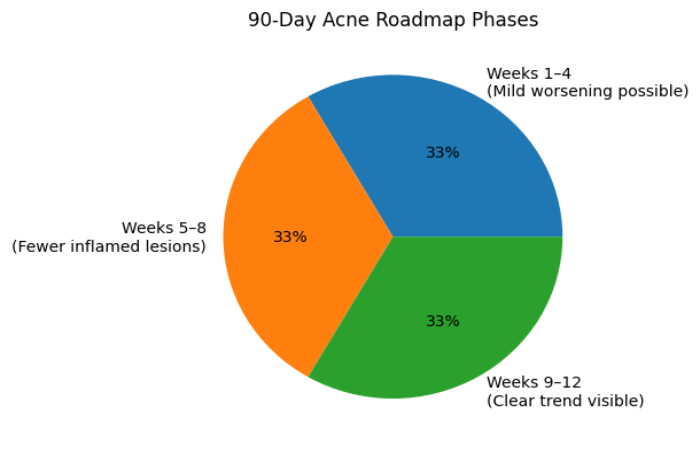
90-Day Acne Roadmap
Lifestyle Factors: Evidence Overview
| Factor | Evidence Level | Practical Advice |
|---|---|---|
| High Glycemic Diet | Moderate | Reduce sugary foods |
| Dairy | Emerging | Observe reaction |
| Sleep | Strong | 7–8 hours nightly |
| Stress | Moderate | Manage cortisol triggers |
Diet alone rarely cures acne but can reduce severity.
Product Pricing Overview Global Averages
| Category | Budget Range | Mid-Range | Premium |
|---|---|---|---|
| Cleanser | $8–$15 | $15–$25 | $30+ |
| Retinoid | $12–$20 | $30 | Prescription cost varies |
| BPO | $8–$15 | $20 | — |
| Moisturizer | $10–$20 | $25–$40 | $50+ |
Realistic Cost of Treating Acne 12 Months
| Severity | Annual Cost (Approx) |
|---|---|
| Mild OTC | $150–$300 |
| Moderate Combo | $300–$700 |
| Severe (Isotretinoin) | $1000–$3000 |
Costs vary widely by country and insurance.
Common Mistakes That Increase Costs
| Mistake | Financial Impact |
|---|---|
| Switching every 2 weeks | Wasted product |
| Buying luxury brands unnecessarily | Higher recurring cost |
| Ignoring dermatologist for severe acne | Scarring treatment later (expensive) |
Laser scar treatments can cost $300–$1500 per session.
Reviews Summary (Across Major Retail Platforms)
| Product Type | Avg Review Trend |
|---|---|
| Adapalene | High satisfaction after 12 weeks |
| BPO Wash | Effective but drying |
| Salicylic Cleanser | Good for mild acne |
| Isotretinoin | Very high long-term satisfaction, but side effects noted |
